
Fairtrade Africa has called for stronger collaboration among cocoa producers, traders, regulators, governments, and other industry players, as stakeholders, to accelerate progress towards a living income for cocoa farmers’ livelihoods amid continuing pressure from low market prices and rising production.
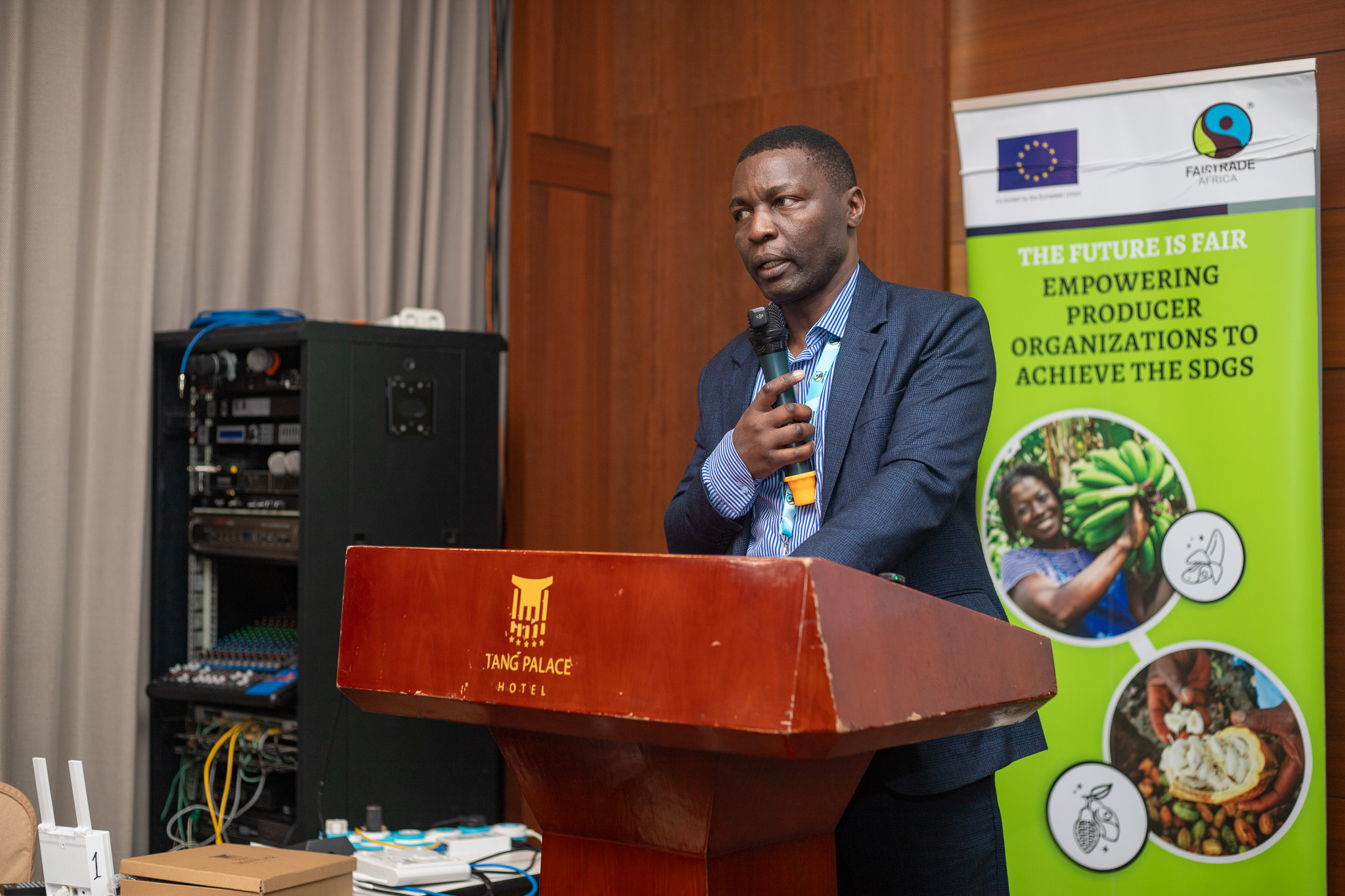
 This call was made during the Fair-Trade Africa Change Day 2026, which brought together Fairtrade-certified smallholder farmers and workers from across Africa, traders, development partners, and other stakeholders to reflect on persistent market access challenges, assess progress in improving farmers’ livelihoods, and identify solutions to these challenges.
The event follows the publication of new Fairtrade Living Income Reference Prices for cocoa, which provide a benchmark for the price farmers need to earn a living. For Ghana, the reference price has been set at GH¢45.40 per kilogramme, equivalent to about US$3.95 and a 10 per cent increase on the previous level. In Côte d’Ivoire, it is 1,758 CFA francs per kilogramme, approximately US$3.11 and a 47 per cent increase.
Speaking at the Change Day, the Immediate Past Board Chair of Fairtrade Africa, Mr Benjamin Kouame, reiterated the importance of collective action and continuous monitoring progress.
“We are here today with our partners to make a point and to check where we commenced, evaluate where we have gotten to, look at the difficulties and challenges we’ve encountered and come up with solutions to ensure that our activities are more sustainable,” he told delegates.
Mr Kouame highlighted the importance of adopting an economic model that returns financial model that returns financial benefits to farmers and workers such as the Fair Trade, with which they can invest into community development projects and into building the capacity and resilience of farmers, workers and the community at large.
The Executive Director of Fairtrade Africa, Mr Isaac Tongola, said the New Living Income Reference Prices provide a clear benchmark for buyers and other actors seeking to build more sustainable cocoa supply chains.
“Fairtrade, through its standards, is setting that level, and then we can ask our partners, the traders, to buy at that level,” he said.
The Living Income Reference Price is one part of Fairtrade’s multifaceted approach to supporting farmers, alongside the Fairtrade Standards, the Fairtrade Minimum Price, the Fairtrade Premium and the Fairtrade Programmes. While the Fairtrade Minimum Price serves as a floor price that buyers must pay when prices fall below the cost of production, providing a safety net for farmers, the Fairtrade Premium is an additional amount paid on top of the purchase price, which farmers can invest in their businesses and communities.
The Living Income Reference Price, meanwhile, provides a benchmark for the price required for a farmer and their household to achieve a decent standard of living from cocoa production. This is a price that ensures that at the very minimum the farmers can live a decent life from the sales of their cocoa beans,” Mr Tongola explained.
Fairtrade Africa has reported progress through its West Africa Cocoa Programme with over 48,000 beneficiaries in Ghana and Côte d’Ivoire. The poverty levels among the beneficiaries have declined to 17 per cent while the proportion earning a living income has risen from 28 per cent to 48 per cent.
Despite this progress, significant challenges remain across the cocoa sector. Stakeholders at Change Day highlighted the need for stronger strategic partnerships and sustained investment to build more resilient and commercially viable cocoa supply chains. Priority areas highlighted include improving quality and productivity, strengthening farmers’ resilience against plant disease that affects yields, and addressing the rising cost of inputs.
Fairtrade Africa currently works across 18 product categories, and has made impressive strides in their pursuit of stronger collaborations with stakeholders in respective sectors under their newly launched three-year strategy.