
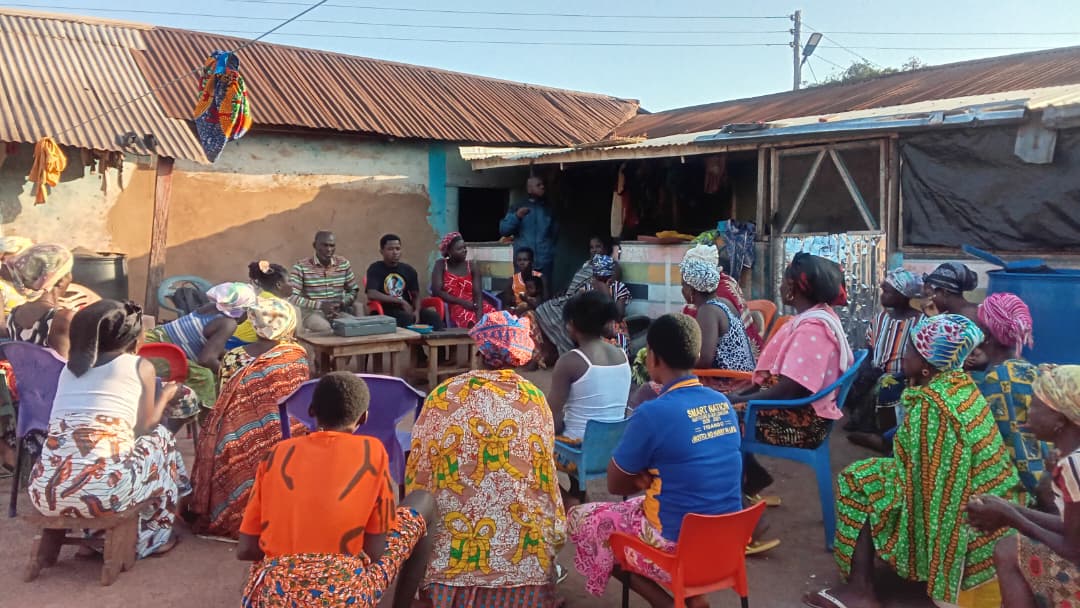
Smallholder women farmers’ groups from Ashiabre and Odumase have been encouraged to adopt biochar and other climate-smart agricultural practices to protect their crops and improve household food production amid increasingly challenging climatic conditions.
 The farmers participated in a two-day training organised by the Iseguri Initiative, a non-profit, non-governmental community-based organisation. The training covered biochar production and application, mulching, and simple drip-irrigation systems made from recycled plastic bottles.
At the opening of the programme, Rejoice Selorm Azameti, the Nkwanta South Municipal Women in Agricultural Development (WIAD) Officer, urged group leaders to take the training seriously and share the knowledge and skills acquired with other members and their communities. She also encouraged participants to ask questions to ensure they fully understood the techniques being taught.
Jemima Etse, focal person for the Iseguri Initiative, warned that high temperatures, strong winds and reduced water availability could threaten crops and livestock. She noted that temperatures could reach 36°C, increasing the risk of crops drying out and making it more difficult for farmers to provide adequate water and feed for their animals.
Raymond Buami, Programme Coordinator, encouraged participants to prioritise household food production. He advised them to water their sack gardens after 6:30 p.m. to minimise water loss, reserve vegetables for household consumption before selling any surplus, and ensure that livestock and poultry had access to adequate water daily.
Biochar was highlighted as one practical option for improving soil resilience. Produced by heating suitable plant materials under limited oxygen conditions, biochar can improve soil structure and help retain water and nutrients when properly prepared and applied. These properties may help crops withstand dry spells while providing a useful way to convert suitable farm residues into a soil amendment. However, its effectiveness depends on the soil type, the materials used and how the biochar is produced and applied.
The Iseguri Initiative hopes the training will equip women farmers in Ashiabre and Odumase with practical skills to conserve water, protect crops and strengthen household food security in the face of climate change.