
Ghana is set to earn approximately US$68 million from the issuance and sale of 6.5 million forest carbon credits after becoming the first country in Africa and the third globally to receive jurisdictional forest carbon credits under the internationally recognised Architecture for REDD+ Transactions (ART) TREES standard.
 The milestone, officially declared on November 10, 2026, during the 31st United Nations Climate Change Conference (COP31) in Antalya, Türkiye, marks a significant breakthrough in Ghana’s efforts to combat climate change, protect forests and attract climate finance for sustainable development.
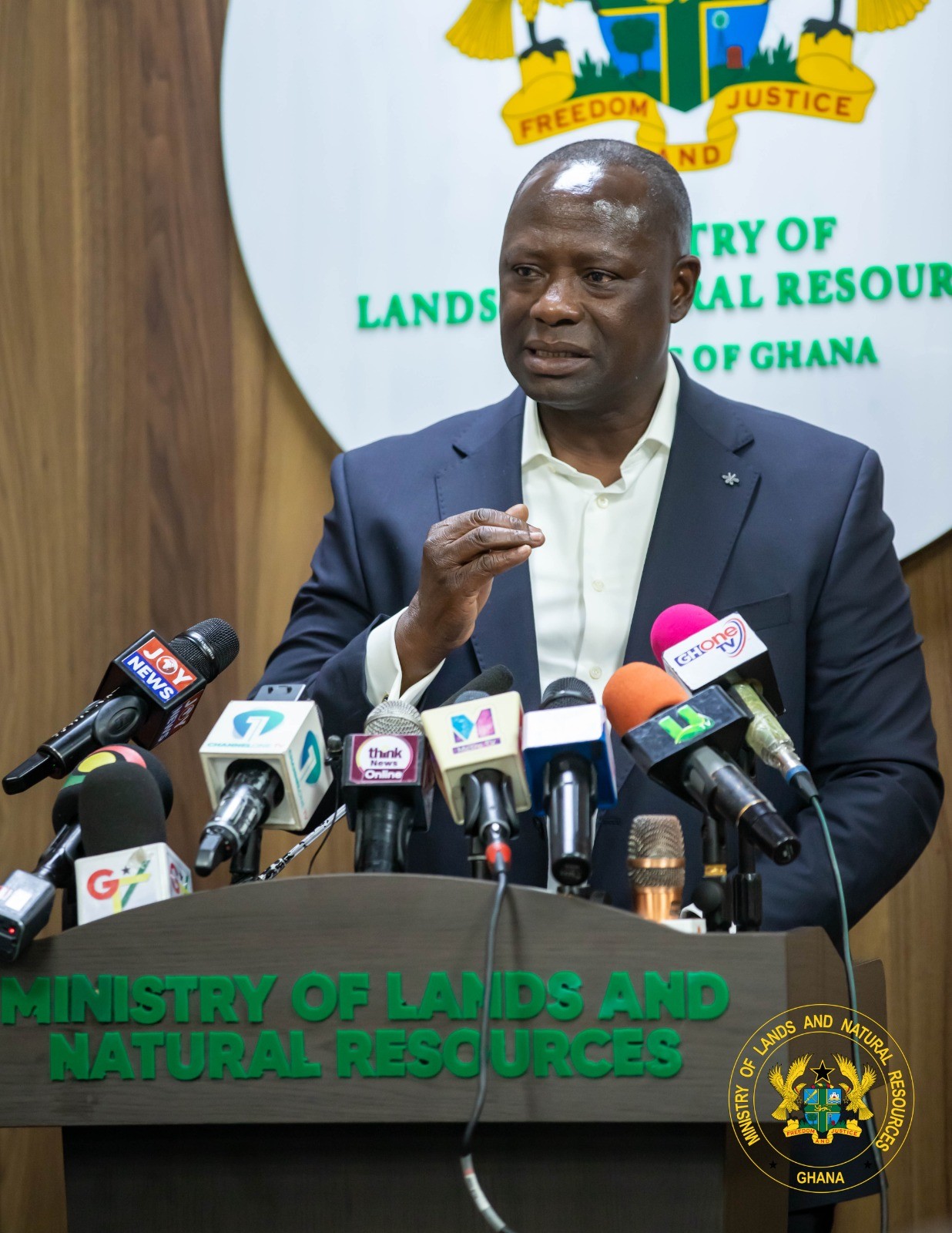
Addressing a press conference in Accra on Monday, Mr Emmanuel Armah-Kofi Buah, Minister of Lands and Natural Resources, announced that buyers had already committed about US$43 million for the purchase of four million tonnes of the credits, while the remaining 2.5 million tonnes could generate an additional US$25 million.
The Minister described the achievement as the culmination of years of investment in forest conservation and sustainable land management, stressing that it reflected a collective national effort.
“We have taken this journey since 2008.Successive Governments have contributed to making sure we continue to protect our forests,” he said.
Mr Armah-Kofi Buah commended the Forestry Commission for its commitment and professionalism, noting that the institution’s efforts had earned Ghana international recognition for measurable reductions in emissions from deforestation and forest degradation.
The 6.5 million carbon credits were issued by ART following an independent verification of emission reductions achieved by Ghana between 2017 and 2021 under its REDD+ programme.
The programme covers about 2.5 million hectares of forest across 10 regions in southern and central Ghana, particularly within the cocoa-forest landscape, where interventions have promoted sustainable cocoa production and responsible land-use management.
Speaking on the significance of the achievement, Dr Hugh Clement Adokwei Brown, Chief Executive of the Forestry Commission, emphasised that the credits were earned through a rigorous international process.
“These credits were not simply allocated to Ghana. They were earned through results that had to be achieved, measured, reported, independently validated, and verified,” he stated.
Dr Brown disclosed that members of the LEAF Coalition and other buyers had committed to purchasing four million tonnes of the credits at prices ranging between US$10 and US$13 per tonne, accounting for approximately US$43 million.
He added that the remaining 2.5 million credits were available for further transactions and could generate an additional US$25 million.
He, however, cautioned that the issuance of carbon credits did not mean the country had already received the funds.
“Government is yet to receive the proceeds from the committed purchases,” he explained, noting that payments would only be made after the completion of sales agreements, verification requirements and other transaction processes.
Dr Brown said an approved benefit-sharing arrangement would see 46 per cent of the revenue allocated to communities, farmers and traditional authorities, while 39 per cent would go to government institutions, including the Forestry Commission and district assemblies.
He noted that the next monitoring period would cover emission reductions achieved between 2022 and 2026.
He warned that illegal mining, illegal logging, wildfires and unsustainable farming practices remained major threats to the country’s forests and could undermine future carbon credit earnings.
He pledged that the Forestry Commission would continue working with government, traditional authorities and local communities to safeguard Ghana’s forests and sustain the gains made.
Climate finance partners say Ghana’s breakthrough positions it to become the first African country to access large-scale results-based financing through the LEAF Coalition, with proceeds expected to support forest conservation, biodiversity protection, community livelihoods and long-term economic growth while showcasing Africa’s growing role in global carbon markets.
By Godwill Arthur-Mensah, GNA