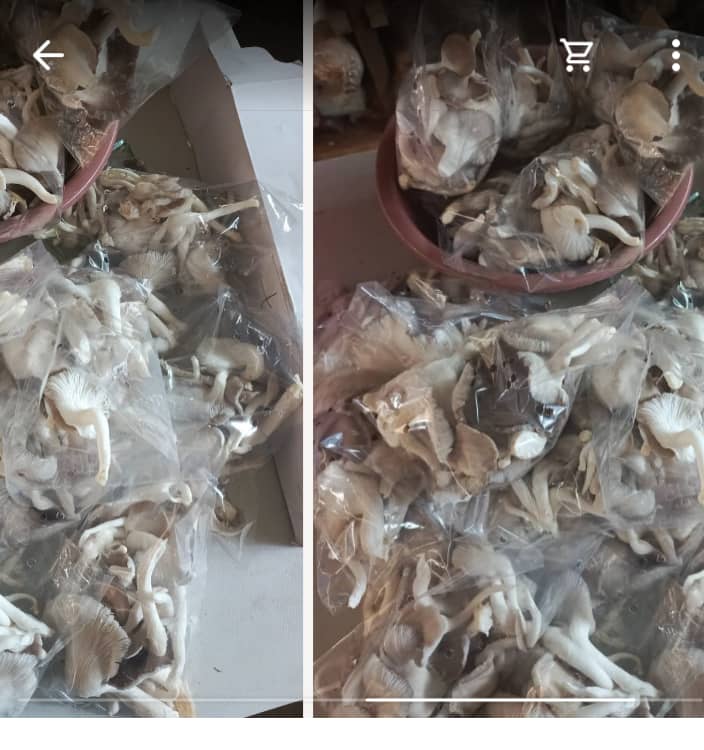
Mushroom cultivation is gradually emerging as a viable agribusiness venture in the Oti Region, offering prospects for jobs creation, income diversification and improved food security.


Favourable Conditions for Production
The Oti Region has a predominantly agrarian population, with farming employing between 60 and 80 per cent of residents. Districts such as Kadjebi and Jasikan experience relatively high rainfall and humidity, conditions that are conducive to mushroom cultivation.
Unlike many agricultural enterprises, mushroom farming requires little land and can be undertaken in small spaces. It also makes effective use of agricultural waste materials such as maize stalks, rice straw, sawdust and cocoa pod husks, which are readily available across the region.
Mr Rashad Shaibu, the Kadjebi District Director of Agriculture, told the Ghana News Agency (GNA) that the industry has a lot of prospects in Kadjebi District and that the enterprise can serve as an alternate source of livelihood for women and the youth, while contributing significantly to household nutrition.
Training on Mushroom Cultivation
Mr Joel Aweyam, the Oti Regional Project Officer for Financial Inclusion for Last Mile Actors (FILMA), a multi-partner initiative designed to provide economic empowerment to underserved rural youth, women, and PWDs operating in agricultural value chains to help reduce unemployment.
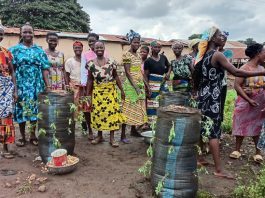
Mr Awayam told the GNA that the partners, including Catholic Relief Services (CRS), SEND Ghana and AV Ventures have trained some groups on mushroom cultivation in the district because of its economic potential and favourable climatic condition for its cultivation in the district.
Untapped Economic Potentials
Despite the absence of official district-level statistics on mushroom production, experts maintain that the enterprise has considerable growth potential.
Nutritional Value of Mushrooms
Mushrooms are widely regarded as a nutritious food source and play an important role in promoting healthy diets. They are rich in high-quality protein, dietary fibre, vitamins and essential minerals while containing low levels of fat and calories.
Nutritionist David Ebenezer Appiah of the Kadjebi Heath Centre, speaking with the GNA, indicated that mushrooms are good sources of B vitamins, including riboflavin, niacin and pantothenic acid, which help the body convert food into energy.
He says mushrooms contain minerals such as potassium, selenium, copper and phosphorus that support various bodily functions.
Mr Appiah said regular consumption of mushrooms may help boost the immune system, improve heart health and support healthy weight management. Their antioxidant properties also help protect the body against damage caused by harmful free radicals.
Industry players say a well-organised mushroom sector could create employment opportunities in production, processing, packaging, transportation and marketing.
Farmers Share Experiences
Ms Gifty Afetsevi, a mushroom producer in Kadjebi and owner of Dosua Enterprises, described mushroom farming as a profitable venture but noted that producers face several operational challenges.
“Mushroom farming is lucrative, but we experience countless challenges, including contamination by green and black molds,” she told the GNA.
She explained that contamination could destroy entire production batches, resulting in significant financial losses for farmers.
“Inaccurate measurements of raw materials can result in the loss of the entire production batch”, she added.
Mr Mathias Komla Bassayi, another mushroom farmer at Nsuta-Buem, shared similar concerns and cited inadequate technical support, limited access to quality spawn and insufficient funding as major constraints affecting the growth of the industry.
He noted that many young people were interested in venturing into mushroom cultivation but lacked the necessary training and start-up capital.
Challenges Facing the Industry
Stakeholders identified contamination, inadequate technical knowledge, limited access to quality production inputs and lack of financing as key challenges confronting mushroom farmers.
The absence of organised markets and value-addition facilities also affects profitability and discourages large-scale investment.
Additionally, many consumers remain unaware of the nutritional and economic benefits of mushrooms, limiting local demand.
Prospects and Opportunities
Mr Rashad Shaibu, the District Director of Agriculture, told GNA that the future of mushroom cultivation in the Oti Region is bright if the necessary support systems are established.
He and other experts recommended regular training programmes for farmers, improved access to quality spawn, financial support from government and development partners, and public awareness campaigns on the nutritional value of mushrooms.
Conclusion
Mushroom cultivation remains a less-explored agricultural enterprise in the Oti Region, yet its prospects for employment creation, income generation and food security are significant.
With favourable climatic conditions, abundant agricultural residues and a large farming population, Kadjebi and other districts in the region are well-positioned to develop a thriving mushroom industry capable of transforming livelihoods and contributing to sustainable economic growth.
A GNA Feature by Daniel Agbesi Latsu