Selix Farms, a young agribusiness based at New Akrade in the Asuogyaman District of the Eastern Region, has significantly expanded its poultry production following support from a post-COVID-19 recovery programme funded by the African Development Bank Group (AfDB).

Mr Felix Amponsah, Chief Executive Officer of Selix Farms, told the Ghana News Agency during a visit to the farm on Friday that the intervention had accelerated the company’s growth, enabling it to expand production capacity and improve infrastructure.
Founded about three and a half years ago by Mr Amponsah and his wife, Evelyn, Selix Farms began as a mango farm before diversifying into poultry after market research revealed strong demand for eggs.
The business initially started with 2,000 birds but faced challenges such as limited space, excessive heat due to low-roof structures, and inadequate financing.
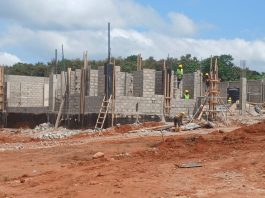
Through the PSDPEP, the company secured a GH¢300,000 loan, which was used to complete a new poultry facility and acquire additional cages and birds.
This increased its bird capacity from 2,000 to about 8,300.
The farm now produces an average of 246 crates of eggs daily, equivalent to more than 8,000 eggs, supplying markets in Tema, Ashaiman and nearby communities.
Despite the growth, Mr Amponsah said the company was seeking further support to expand its operations.
“We want to expand and are still looking for more support to do so,” he said.
The expansion has also created jobs, increasing the workforce from five to 15 employees, including 10 permanent and five temporary staff.
He noted that women, who were previously not part of the workforce, were now employed.
However, challenges remain, particularly in feed production and staff accommodation. The farm currently relies on external milling services, which sometimes affect feed quality.
Mr Amponsah said plans were underway to establish an on-site feed mill to improve efficiency and consistency.
“We currently have to travel to mill our feed, which creates challenges. Our plan is to set up our own facility on-site,” he said.
The company also intends to construct staff accommodation to reduce long-distance commuting and improve productivity.
As part of its diversification strategy, Selix Farms had ventured into pig farming, Mr Amponsah said.
The piggery, established about two months ago, is expected to support long-term plans to move into value-added processing.
“We have started a piggery, and it is doing very well. Our goal is not just to sell livestock but to produce finished products,” he said.
The PSDPEP programme provides low-interest loans of up to 12 per cent annually, along with training and operational support delivered through partners such as the Africa Skills Hub.
It targets sectors such as agribusiness, manufacturing and hospitality, with the aim of supporting about 25,000 micro, small and medium scale enterprises nationwide.
Mr Amponsah encouraged young people to venture into agribusiness, stressing the importance of market research and continuous learning.
Looking ahead, he said the farm aimed to integrate production and processing within the next five years.
Desmond Okudzeto, a staff member, said his livelihood had improved due to the farm’s expansion, citing new skills and income opportunities.
“It has done so much for me. I now know how to administer medication and care for the birds. I’ve even started a small venture to support my mother,” he added.
By Benjamin A. Commey, GNA