Mr. Wepia Addo Awal, National President, Peasant Farmers Association of Ghana (PFAG), has urged stakeholders in the agricultural value chain to commit to building a future where farmers move beyond mere survival to real prosperity.

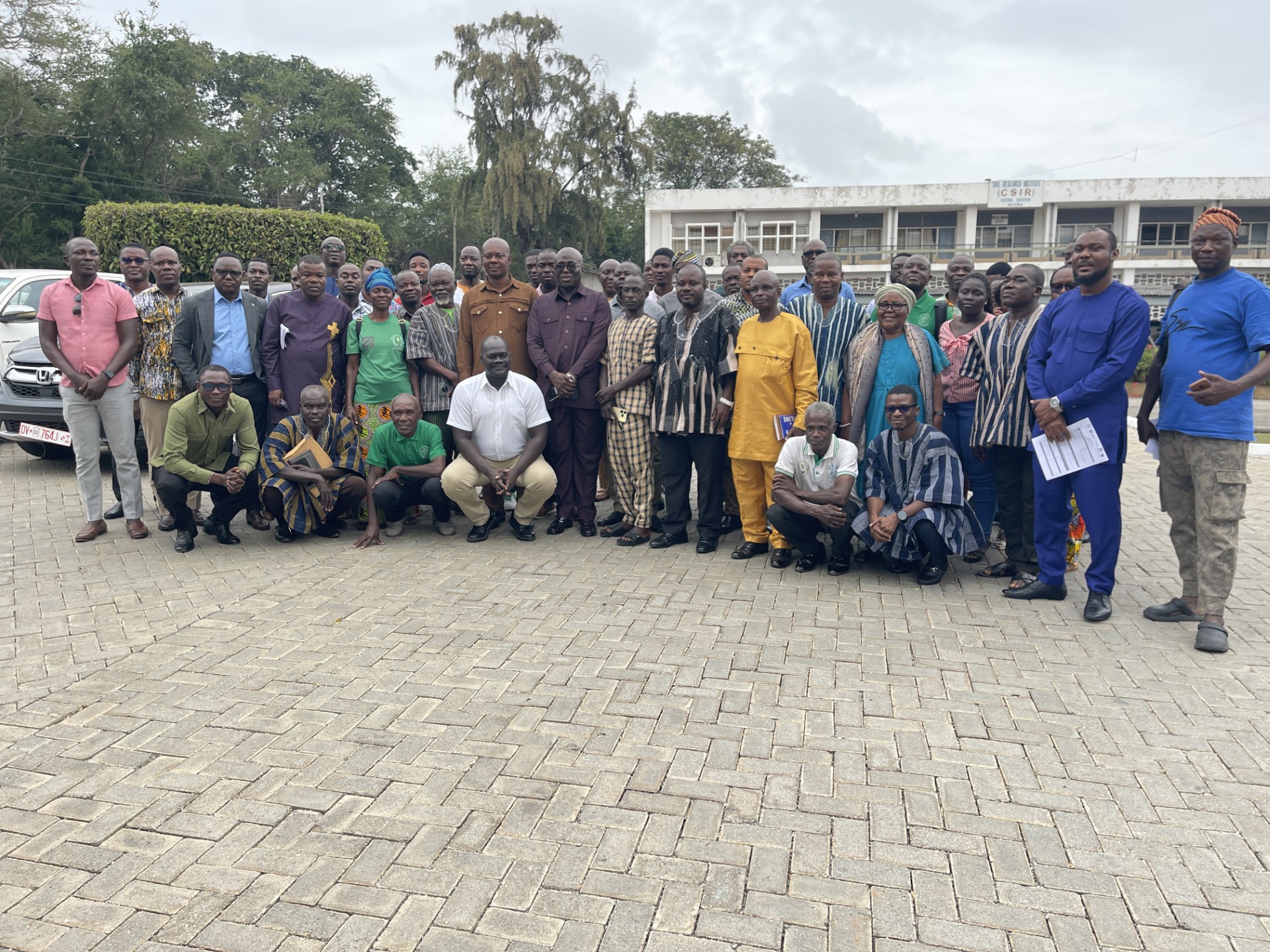
The National President was speaking at a stakeholder engagement on the New Comprehensive Africa Agriculture Development Programme (CAADP), ECOWAP Reviews, and the Feed Ghana Programme.
It was organized by the PFAG in partnership with the African Union Commission, ECOWAS Commission, and the Ministry of Food and Agriculture (MOFA), with support from OXFAM.
The CAADP serves as the overarching framework guiding the continent, ECOWAP as the regional guide, and our domestic policy, with the Feed Ghana Programme as the vehicle to ride on toward agricultural success in Ghana.
Mr. Awal said Ghana had been a dedicated signatory to the CAADP since 2003, recognizing its power to transform the agricultural landscape, however, the path to fulfilling the commitments under the CAADP had been uneven and largely disappointing.
He said despite Ghana’s 94 per cent score in the CAADP Biennial Review, the country continued to fall short of the Malabo Declaration pledge to allocate 10 per cent of its budget to agriculture which should translate into 6 per cent growth in the sector.
He said Ghana’s allocation to agriculture had seen a steady decline, falling from 6.2 per cent in 2019 to below 1 per cent in the 2025 budget, which raised serious concerns about the country’s commitment to ECOWAS protocols and its broader agricultural growth targets.
Mr. Awal said the 4th Biennial Review of the Malabo Declaration showed that none of the 49 participating African countries met the 2023 targets, a sharp decline from previous years, underscoring the urgent need for renewed continental commitment to agricultural growth and trade.
He said the newly launched Feed Ghana Programme offered a fresh chance to transform agriculture, with early signs of benefits already reaching smallholder farmers and PFAG members.
“A stronger cedi and falling inflation have reduced agricultural input costs by 5–10 per cent, offering smallholder farmers relief and renewed hope for higher productivity,” he added.
The National President said Ghana loses an estimated $1.9 billion annually to post-harvest losses, according to the World Food Programme (WFP), representing a massive loss of income for farmers and a direct threat to national food security.
He called on the Ministry to establish a mechanism to purchase local produce from farmers at competitive prices and channel it toward industry, government institutions, and strategic national reserves.
Mr. Eric Opoku, the Sector Minister, said the government was committed to operationalising agriculture as a driver of economic growth, stressing that irrigation infrastructure would be expanded to ensure year-round food production.
He encouraged households to adopt home gardens to supplement family nutrition, reduce food costs, and contribute to food security.
The Minister also urged state institutions to take the lead by establishing demonstration farms, while calling on Senior High Schools to revive school farms as practical learning platforms, and also to assist in the fight for food security.
Mr. Opoku said faith-based organisations had a role to play by mobilising their members to embrace agricultural initiatives that would not only create jobs but also sustain livelihoods.
By Edward Dankwah, GNA