Faced with rising sea levels, mangrove degradation and the impacts of climate change, coastal communities in Togo are taking action. From Aného to Tsévié, including Agbodrafo, Goumoukopé, Lilicopé and Ayronkopé, local initiatives are helping restore ecosystems, transform livelihoods and strengthen community resilience.

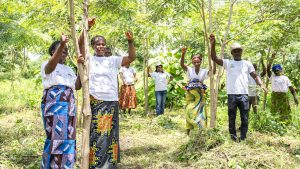
©FAO/Kokou Dogbo
This momentum is supported by the Food and Agriculture Organization of the United Nations (FAO), with funding from the Global Environment Facility (GEF), through the project “Strengthening the climate resilience of coastal communities in Togo” (R4C-Togo). In these areas exposed to coastal erosion, land salinization and declining fisheries resources, the project supports communities in ecosystem restoration, reforestation, sustainable aquaculture and the development of income-generating activities, particularly for women and youth.
In Avépozo, coconut tree planting helps curb erosion and improve agricultural productivity. “Our land is better protected and our crops are more productive. Our incomes have improved,” says Akouvi Gahou, member of a women’s vegetable growers’ association.
In Aného, women’s cooperatives are developing crab and oyster farming systems in restored lagoon areas.
“We have moved from individual fishing to organized farming. This activity is more stable and profitable and also benefits the community,” explains Ayénou Gombélé, beneficiary and cooperative member.
In Ayronkopé, communities are restoring mangroves, which are essential for biodiversity and ecosystem protection.
“Fishery products are now more abundant and of better quality,” notes Kponkou Kanlé, a community actor engaged in environmental restoration.
In Lilicopé, restoration efforts are also helping stabilize riverbanks and revive agricultural activities.
“We are seeing improvements in the environment and better resistance of our homes to extreme weather,” says Sokpa Adjo, project beneficiary.
The project also supports aquaculture through the construction of a hatchery and the strengthening of the fisheries research center of the Togolese Agricultural Research Institute (ITRA, from its French acronym) in Agbodrafo.
“My production capacity has increased fourfold,” says Toï N’feidé, researcher at ITRA and head of the fisheries station.
Furthermore, the installation of an electrical transformer has improved energy supply to the center and surrounding communities, enabling more efficient operation of production equipment. According to the project coordinator, Ditorgue Bakabima of the Forest Development and Management Office (ODEF, from its French acronym), the project has generated significant impacts. It has contributed to integrating climate change adaptation into local policies in eight municipalities and strengthening the capacities of more than twenty-three thousand stakeholders.
The project has also supported the management of classified, community and sacred forests, mangrove restoration, and the establishment of wood-energy plantations.
Around twenty cooperatives have received equipment (motor pumps, solar pumps, grinders and irrigation systems) to support agricultural production, particularly during the dry season. In Tabligbo, a storage facility equipped with a solar dryer supports moringa processing by a women’s cooperative.
For FAO, the results demonstrate the project’s tangible impact on strengthening the resilience of coastal communities.
“The achievements will be consolidated and scaled up through new projects,” says Oyetounde Djiwa, FAO Assistant Representative in charge of Programme.
Through its interventions, the R4C-Togo project promotes ecosystem restoration, the protection of natural resources, and the development of sustainable economic activities. Through funding from the Global Environment Facility (GEF), including the Least Developed Countries Fund (LDCF), the project is being implemented by FAO in partnership with the Government of Togo.
Source: FAO