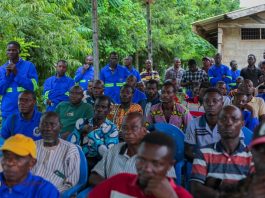
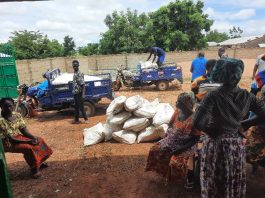
The Women Poultry and Livestock Association (WOPOLA) has rolled out a major tree planting and soya bean farming initiative in the Nyariga community in the Bolgatanga Municipality as part of efforts to combat climate change and enhance food security.


The beneficiary institutions included the Nyariga Primary School, Nyariga Junior High School, Nyariga Girls Model School, and the Nyariga Health Facility.
Tree species planted included neem, gmelina, mango, cashew, guava, and teak.
Mrs Theresa Alegmiah, President of WOPOLA, told the Ghana News Agency (GNA) that the activity formed part of a broader women’s empowerment and environmental protection agenda designed to build community resilience to the impacts of climate change and improve food and nutrition security.
“Beyond tree planting, the women are also sowing soyabean as a way to promote household nutrition and generate income through agriculture,” she said.
She stressed the importance of trees, noting that “trees are life” as they offer shade, food, medicine, and protect communities from storms, hence the Association’s commitment to championing afforestation at the community level.
Ms Diana Asamane, Project Coordinator of WOPOLA, noted that the activity aligned with the government’s Tree for Life (Green Ghana) Initiative and would contribute to national afforestation efforts.
“This is our way of supporting government’s vision. But more importantly, we are redefining the role of women in development. The days of limiting women to the kitchen are over. Today, we are tree planters, farmers, livestock farmers, and honey producers,” she said.
She stated that the entire initiative was self-funded and appealed for support from government agencies, corporate institutions, individuals, and donor organisations to sustain and expand their activities.
She revealed plans to extend their operations to all 15 districts in the Upper East Region and subsequently to the Upper West, North East, Northern, and Savannah Regions.
Mr Fredrick Appiah, who spoke on behalf of the Headteacher of the Nyariga Primary School, commended the women for their dedication and stressed the importance of community ownership in sustaining such initiatives.
“This tree planting is different because the women are determined to nurture the trees. Often, we plant trees and lose them due to neglect or theft, especially in the case of mango. But involving women and the community creates ownership, and that makes all the difference,” he said.
WOPOLA is a community-based women’s empowerment organisation operating across various districts in the Upper East Region.
It brings together women engaged in poultry farming, livestock rearing, honey production, tree planting, and crop cultivation.
The Association aims to improve household incomes, enhance food security, and contribute to environmental sustainability by promoting collective action and elevating the role of women in national development.
By Gilbert Azeem Tiroog, GNA