

A total of 20 small scale maize processors have undergone training to equip them with knowledge and practical skills to develop nutritious, marketable products from biofortified maize.
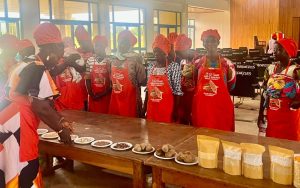 The day’s training also focused on the nutritional benefits of biofortified maize and appropriate processing methods to help retain nutrients as well as opportunities for value addition and commercialisation.
Participants included mainly women processors drawn from the Tolon District of the Northern Region, and they were expected to transfer the knowledge to other processors within their communities.
The training, held at Nyankpala, near Tamale, was organised by the Council for Scientific and Industrial Research-Savanna Agricultural Research Institute (CSIR-SARI) in collaboration with the African Agricultural Technology Foundation.
It formed part of the implementation of the Technologies for African Agricultural Transformation Phase II Maize Compact commonly referred to as the TAAT II Maize Compact.
The TAAT II Maize Compact seeks to accelerate the dissemination, adoption, and utilisation of improved maize technologies across Africa, and in Ghana, it supports the promotion of high-yielding, climate-resilient and nutrition-enhanced maize varieties together with appropriate production, processing, and marketing technologies.
Dr Desmond Sunday Adogoba, Innovations Scaling Specialist at CSIR-SARI, speaking during the training, said it sought to introduce processors to ways of enhancing and adding value to biofortified maize while improving household nutrition.
Dr Adogoba said participants were expected to develop three different food products using biofortified maize and other nutrient-rich ingredients for consumers.
Dr Adogoba called for increased financial support for processors and other actors along the agricultural value chain to enable them to expand their businesses and contribute more effectively to the production and utilisation of nutritious food products.
Dr Flora Amagloh, Food Scientist and Human Nutritionist at CSIR-SARI emphasized the need for processors and nutritionists to work together to adopt appropriate processing methods to retain nutrients.
She said biofortified maize had enhanced levels of important micronutrients including iron, zinc and provitamin A, which could help address nutritional deficiencies.
She said about one in three women of reproductive age globally suffered from anaemia with iron deficiency being a major contributor while up to 50 per cent of children aged six to 59 months in sub-Saharan Africa suffered from vitamin A deficiency.
Dr Amagloh said biofortification provided a sustainable food-based approach to addressing such micronutrient deficiencies, especially because biofortified maize could deliver essential nutrients through foods already consumed by households.
She encouraged consumers to consider biofortified maize products, especially orange-coloured maize, which contained enhanced levels of provitamin ‘A’ compared with conventional white maize.
She urged processors, retailers and wholesalers to increase their uptake of biofortified maize and collaborate with seed companies and research institutions to access improved varieties.
She also called on policymakers to develop and implement policies that promoted the production, adoption, and consumption of biofortified maize, saying improved nutrition could contribute to increased productivity and economic development.
Miss Helen Akunyara, a participant and Chief Executive Officer of Nogma H Enterprise, said the training had broadened her understanding of the nutritional composition of maize and would help her improve the processing of tom brown and other cereal-based products.
She urged local processors not to limit themselves to household-level production but to seek opportunities to expand their businesses and meet the standards required to access wider markets.
Dr Isaac Kodzo Amegbor, Research Scientist at CSIR-SARI and Coordinator of TAAT II Maize Compact, urged participants to take advantage of the training to improve their operations.
He said, “We expect you to apply the knowledge in your homes, businesses, organisations and communities, and to support the wider production, processing, consumption and commercialisation of nutritious, value-added biofortified maize products”.
By Albert Futukpor, GNA