
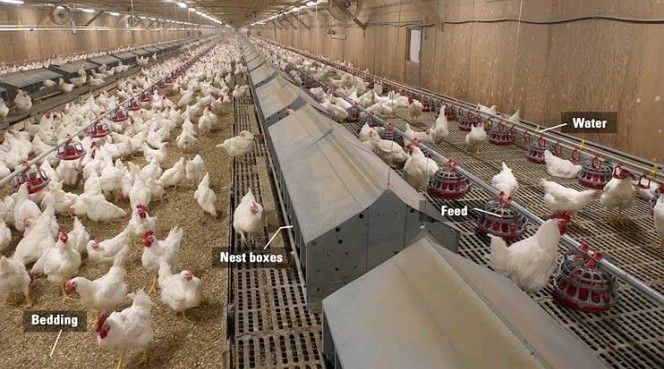
Mating between males and females are transferred from the pullet farm to the production farm between 18 and 23 weeks of age. Broiler breeders reproduce by natural mating. Unlike commercial turkeys, artificial insemination is not used. Flock or mass mating allows a number of males to mix with an entire flock of hens.
 Management practices to enhance mating efficiency include feeding programs to control body weights in female and male broiler breeders and maintenance of an optimum male:female ratio in the breeding flock.
The recommended gender ratio is about 10 males per 100 females. Initially, 8 males per 100 pullets may be better to reduce male aggression toward hens and other males, reduce female mortality, and encourage hen receptivity.
Mating frequency of males is estimated to be 5-40 times per day. Mating frequency of hens is estimated to be about 0.5 to 1.0 per day.
Broiler breeder male fertility is high (more than 95%) until approximately 40 weeks of age, but declines thereafter because of reduced rooster mating frequency, lower percentage of live sperm, and the need for hens to mate more often to maintain fertility.
To compensate for a decline in mating activity, Spiking or intra-spiking of the flock with new males is used to stimulate male interest in mating. Beyond 65-70 weeks of age, fertility drops to low levels and the flock is sold.
Spiking consists of adding new, younger roosters to a flock to compensate for a decline in fertility, which generally occurs after 40-45 weeks of age, but can occur anytime and may occur more than once.
During the first 6 weeks after spiking, increased mating is primarily due to old males that are stimulated by the presence of the young males. After 6 weeks, increased mating is due to activity of the young males.
For the first week after spiking there is an increase in male aggression with elevated male mortality and sexual interference (males preventing other males from mating).
The result is approximately 12 weeks of increased or sustained fertility. During the first week after spiking, fertility declines slightly due to male aggression and mating interference but significantly increases by 2 weeks post-spiking.
Bringing new males into the flock creates a biosecurity risk. Intra-spiking overcomes this problem by exchanging males of the same age between houses on the same farm or between pens in the same house. Intra-spiking males are stimulated by encountering new hens and begin to mate immediately.
Aggression and sexual interference increase for the first two weeks after intra-spiking but there is no significant increase in mortality from either the original males or spiked males. Double intra-spiking is possible and may help maintain higher levels of hatchability for up to 15 weeks.