
Deadline: 31st July 2026
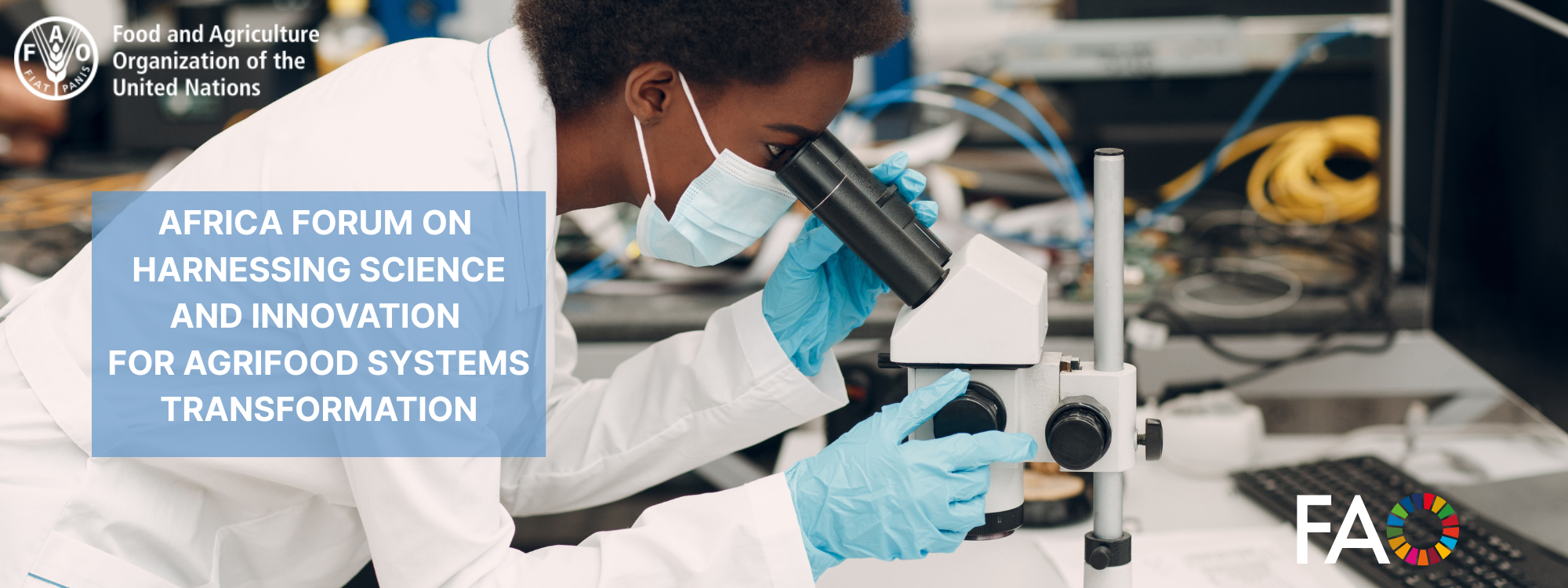
The Food and Agriculture Organization of the United Nations (FAO), in collaboration with partners, is organizing the Africa Forum on Harnessing Science and Innovation for Agrifood Systems Transformation, in line with the Comprehensive Africa Agriculture Development Programme (CAADP) Strategy and Action Plan 2026–2035. The Forum is conceived as a continental platform to accelerate this transformation by connecting science, innovation policy, investment, and implementation.
 Objective of the Forum
The overall objective of the Forum is to accelerate the transformation of Africa’s agrifood systems by convening a continental science and innovation platform that connects research, technology, policy, investment, and implementation.
Specifically, the Forum will:
- Showcase scalable and inclusive innovations and pathways that address key agrifood systems challenges and support adoption by smallholders.
- Catalyze high-level policy dialogue to address systemic constraints and strengthen enabling environments for science and innovation.
- Facilitate partnerships between innovators, financiers and the private sector to mobilize investment for scaling solutions.
- Develop a regional roadmap to strengthen research and innovation systems across Africa.
What This Call Is Seeking
This Call for Technical Contributions seeks to identify and curate high-value contributions that can directly inform the Forum’s substantive discussions, exhibitions, investment dialogue, and regional follow-up agenda. The call is therefore intended not only to gather materials for the presentation but also to identify solutions, evidence, and models that can support concrete outcomes, including the development of a regional roadmap to strengthen research and innovation ecosystems across Africa. FAO therefore invites technical contributions that demonstrate not only innovation, but also relevance, evidence, and practical potential for uptake, adaptation, replication, or scale.
Submissions should preferably present proven or sufficiently validated solutions, approaches, or institutional mechanisms that can contribute to one or more of the following:
- improved productivity, resilience, sustainability, inclusion, or market access;
- stronger research-to-field pathways;
- better policy and regulatory conditions for innovation uptake;
- increased investment readiness and partnership potential; and/or
- stronger regional systems for science, research, extension, and innovation.
Focus Areas
Submissions should align with one or more of the following five priority pillars of the Forum (two thematic and three cross-cutting):
| Pillar | Description |
| Thematic | Productivity and Value-Chain Optimization | • Proven innovations, technologies, business models, etc., that optimize value addition and productivity across value chains (i.e. increase quantity per unit of input, reduce loss and waste, and enhance quality while ensuring enhanced utilization, safety and sustainability.
|
| Resilience and Environmental Sustainability | • Proven innovations, technologies, business models, social innovations, etc., that address multiple risks, foster sustainable management of natural resources, and build resilience.
|
|
| Cross-cutting | Science, Innovation and Policy Interface | • The dynamic relationships through which scientific knowledge and innovation inform public policy and decision-making, on one hand, while how policy frameworks also shape research and innovation priorities on the other hand.
|
| Investment and Partnerships | • The financial, human, technical, or infrastructural resources, along with the collaboration arrangements, and institutional cooperation needed to generate, develop, scale, and apply scientific knowledge and innovative solutions.
|
|
| Inclusivity | • Ensuring that the generation, dissemination and application of knowledge and technologies are participatory, accessible and equitable, engaging diverse actors, including smallholders, women, youth and indigenous communities, and delivering context-specific solutions leaving no one behind. |
Who Should Submit
We welcome submissions, including joint ones, from a diverse range of participants, including but not limited to:
- National and regional research institutions
- Agricultural professionals and practitioners.
- Researchers and academicians
- Private R&D institutions
- Universities and centers of excellence,
- Civil society and non-governmental organizations
- Private-sector actors, including agribusinesses and agri-tech enterprises,
- Policymakers and government representatives
- Students and early-career professionals
- International and regional organizations
- Philanthropic organizations, non-governmental organizations (NGOs), development agencies, and community organizations
If your work aligns with the theme of the Forum and contributes to innovation, advancing knowledge, practice, or policy, we encourage you to submit for consideration, indicating the specific focus area(s) accordingly.
Submission Guidelines
- Contact details (Name, Organization, Address, Email).
- Author(s) and email(s).
- Title (max 150 characters).
- the problem addressed,
- the nature of the innovation, evidence, model, or policy instrument,
- the relevance to African agrifood systems transformation
- The language of submission is English or French.
- Length (max 3,500 characters).
Acceptable Formats for Technical Contributions
Submissions may take different formats depending on the nature and maturity of the contribution, including research, policy, innovation or investment-oriented materials.
- Technical case studies or innovation profiles describing validated solutions with evidence of performance and scalability.
- Research papers or evidence briefs presenting findings with clear implications for policy or practice.
- Policy or institutional papers analysing enabling environments, regulatory frameworks or governance mechanisms.
- Investment concepts or project pipelines demonstrating bankable opportunities and partnership potential.
- Innovation scaling pathways or business models showing how solutions move from pilot to adoption at scale.
- Practical tools or knowledge products such as digital tools, methodologies or operational frameworks.
- Optional audio-visual or demonstration materials to support exhibitions or showcase sessions
Submission Process and Deadline
Submissions should be emailed to: [email protected] by 31st July 2026.
For more information.