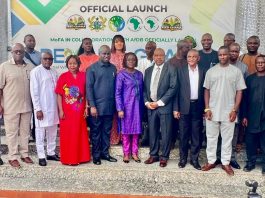
The Food and Agriculture Organisation (FAO) of the United Nations has begun working with national and local partners, to strengthen disaster risk reduction, climate information services and anticipatory action as the country prepares for the possible impacts of a strengthening El Niño event.

The Ghana Meteorological Agency (GMet) had warned that the developing El Niño event could exacerbate climate risks in the country from November this year into the first half of 2027, including prolonged dry spells, rainfall variability and higher temperatures.
These conditions could disrupt agricultural production, affect water availability and place additional pressure on the livelihoods of farming communities.
The statement said “With financial support from the Government of Canada and the Kingdom of Norway, the effort brings together GMet, the National Disaster Management Organisation (NADMO), the Ministry of Food and Agriculture (MoFA), District Assemblies and local communities to strengthen preparedness for these climate risks and help vulnerable communities act before potential El Niño-related hazards translate into losses.”
It said “A central part of this work is strengthening Ghana’s disaster risk governance. At the national level, FAO is working with NADMO to develop a National Disaster Risk Reduction Strategy and Action Plan alongside a National Early Warning and Anticipatory Action Stakeholder Platform.”
It said “Together, these mechanisms are intended to improve coordination among key institutions and strengthen how early warning information is generated, shared and used to support timely action ahead of climate-related hazards.”
It added that the partners were also strengthening the dissemination and use of weekly weather forecasts, seasonal climate outlooks, hazard alerts and early action advisories.
The statement said “This is particularly important in the context of a possible El Niño event where timely climate information can help communities anticipate prolonged dry spells, changing rainfall patterns and periods of higher temperatures.”
It said “For farming communities, acting on this information can mean adjusting planting decisions in response to rainfall forecasts, protecting livestock during periods of heat or water stress, preparing water resources and taking other preventive measures before conditions worsen.”
“Together, these efforts are strengthening the connection between national disaster risk governance, climate information services and action at community level helping Ghana move from responding to climate-related losses after they occur to preparing for risks before they escalate,” it said
The statement said by 2027, the interventions were expected to contribute to enhanced risk governance, better-prepared communities, reduced losses and damages, and stronger institutions capable of anticipating and managing climate-related risks ultimately helping to protect lives, livelihoods and the economy.
By Albert Futukpor, GNA