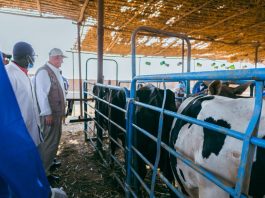
Dr. Young Jin Kim, the Director of KOPIA Ghana, together with the Administrator and Farm Manager from KOPIA Ghana, have visited greenhouse tomato trial sites in the Ashanti Region.


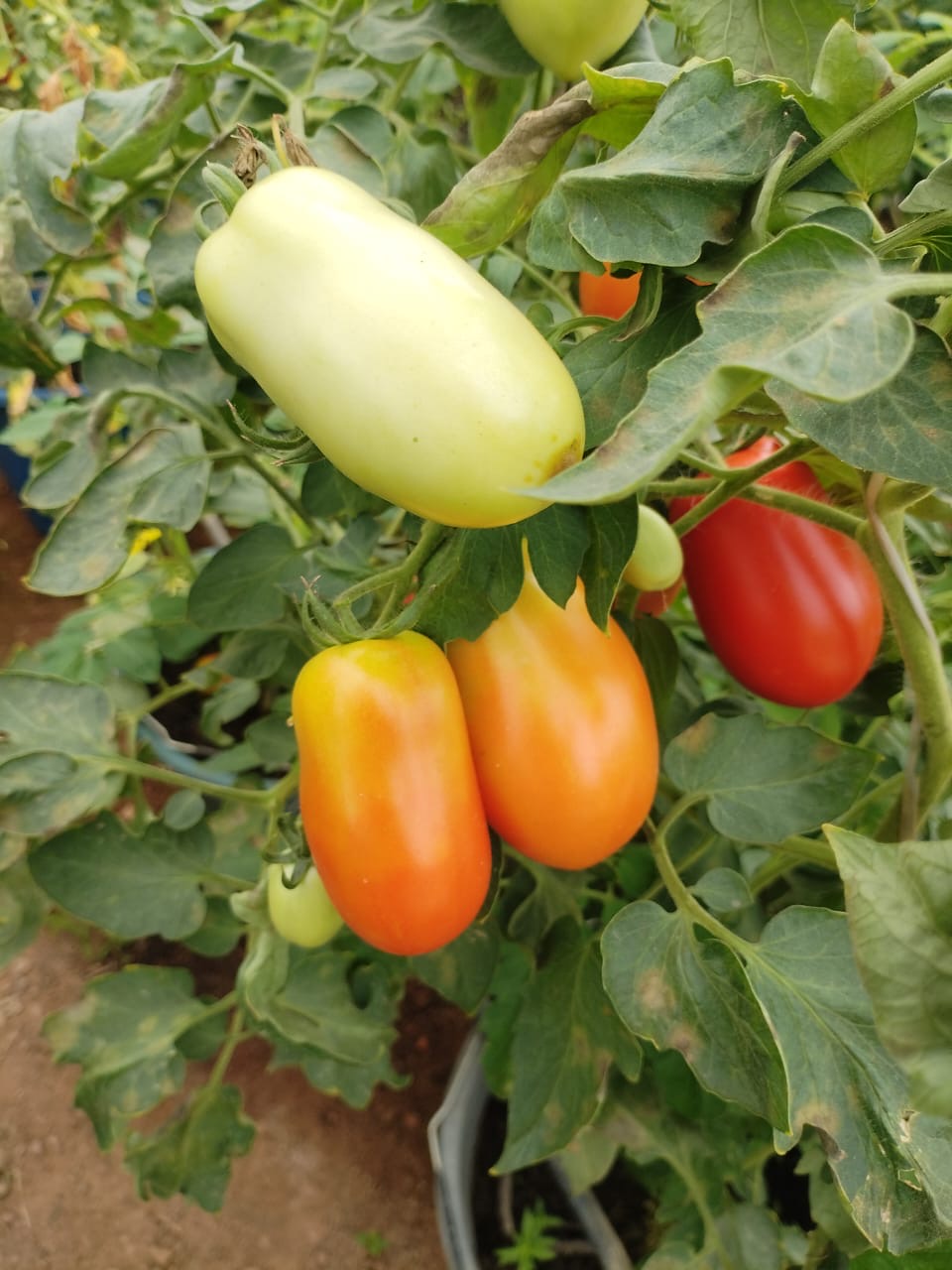
The project is evaluating climate-smart greenhouse trials for new tomato lines developed by the Council for Scientific and Industrial Research-Crops Research Institute (CSIR-CRI) in partnership with WorldVeg.
Led by Dr. Michael Kwabena Osei, the Principal Research Scientist and Vegetable Breeder at CSIR-CRI, the team visited facilities at the Kwame Nkrumah University of Science and Technology (KNUST), CSIR-CRI-Kwadaso and the Akumadan Irrigation Site.
The tomato lines under evaluation include both inbreds and open-pollinated lines/genotypes.
Tomato is one of Ghana’s most important vegetables, with strong year-round demand.
However, traditional open-field production faces major challenges including yields, poor fruit quality, high pest and disease pressure, and low profitability for farmers.
Greenhouse technology, therefore, offers a climate-smart alternative by providing higher yields, better-quality fruit, and protection from climate shocks.
Yet, the adoption of this technology in Ghana remains low due to limited knowledge, skills, and access to affordable varieties.
To bridge this gap, the KOPIA-funded project seeks to enhance sustainable and climate-resilient tomato production in Ghana through evaluation of high-performing, disease-resistant and climate-resilient tomato genotypes for greenhouse production.
Again, it will help with on-farm demonstration of improved varieties and greenhouse technologies as well as building capacities of smallholder farmers in greenhouse production and marketing.
Already, seven tomato lines have been established for evaluation across six locations nationwide.
The locations are Akumadan – Ashanti Region, Dormaa East, UENR Campus – Bono Region, Sogakope SHS Campus – Volta Region, Kwadaso, CSIR-CRI – Ashanti Region, KNUST, Agri-Impact – Ashanti Region, and KOPIA Ghana – Greater Accra Region.
Dr. Osei, during the visit, explained that most greenhouse tomatoes currently grown were expensive hybrids, adding that, “if these CSIR-CRI lines are successful, they will provide a cheaper, locally available alternative for farmers interested in greenhouse cultivation”.
He said this technology was critical for all-year-round production and for boosting farmer incomes while building resilience to climate change.
Dr. Kim expressed satisfaction at results from the greenhouses visited, indicating that, “the early results show very promising performance” and urged the project team to continue assessing the economic and environmental impact of these sustainable production practices as the trials progressed.
By Florence Afriyie Mensah