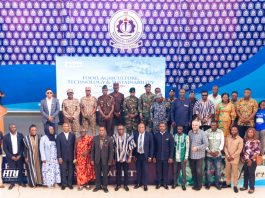
Government has announced plans to invest US$1 billion in the construction of the Pwalugu Multipurpose Dam as part of efforts to achieve vegetable self-sufficiency and establish a strong foundation for Ghana’s vegetable industry.


He said the project formed the seventh major intervention under the Government’s agricultural transformation agenda and would provide 25,000 hectares of irrigated land to support year-round vegetable production, flood control, water security and agribusiness development along the White Volta corridor.
According to the Minister, the project would also generate 70 megawatts of hydropower to support agro-processing industries in and around the Pwalugu enclave.
The electricity generated is expected to power processing factories, irrigation systems, packhouses and cold storage facilities, linking agricultural production directly to processing and enabling value addition closer to farming communities.
Dr Forson said the reservoir would also support aquaculture development through the installation of 1,000 fish cages to expand opportunities within the fisheries value chain.
He indicated that the first phase of the project was expected to be completed by early 2029, while full completion was scheduled for December 2030.
The Minister added that the Pwalugu Dam project would be complemented by serviced vegetable production enclaves in other regions, water-harvesting systems and protected cultivation initiatives to strengthen the country’s vegetable industry.
On November 29, 2019, former President Nana Addo Dankwa Akufo-Addo cut the sod for the commencement of the Pwalugu Multipurpose Dam project on the White Volta River at Pwalugu, spanning the Talensi District in the Upper East region and the West Mamprusi Municipality in the North East region.
The project was initially estimated at US$993 million and designed to include a 60-megawatt hydroelectric power plant, a 50-megawatt solar power facility and an irrigation scheme covering about 25,000 hectares of farmland.
It was also intended to mitigate perennial flooding along the White Volta Basin, particularly the effects of annual spillages from the Bagre Dam in neighbouring Burkina Faso.
However, implementation of the project faced financing difficulties after the original funding arrangement under the US$2 billion Master Project Support Agreement with Sinohydro Corporation stalled, prompting Government to seek alternative sources of funding.
In May 2024, the Ghana Irrigation Development Authority (GIDA) clarified that Government had paid US$11.949 million to PowerChina, the contractor responsible for the irrigation component of the project, as part-payment of mobilisation fees.
The Authority explained that the payment, made in three instalments, was secured by a bank guarantee valued at approximately US$60.7 million and did not constitute payment for completed construction works.
GIDA stated that the contractor had undertaken preparatory activities, including engineering designs, environmental and social impact assessments, geological and geotechnical investigations, land suitability studies and resettlement planning.
Physical works completed included the construction of a 5.2-kilometre access road to the contractor’s camp, site offices and other auxiliary facilities.
The Authority, however, noted that the contractor had temporarily suspended work while Government pursued additional financing for the project.
The latest US$1 billion investment announcement and the accompanying implementation timeline are expected to revive momentum for the project, which remains a strategic development priority for northern Ghana.
Beyond its irrigation and power-generation components, the project is expected to enhance agricultural productivity, promote agro-processing, create employment opportunities and improve the livelihoods of communities along the White Volta corridor.
By Anthony Adongo Apubeo, GNA