

Ghana is scaling up the commercial production of improved yam planting materials to raise yields, increase farmer incomes and strengthen the yam export value chain.
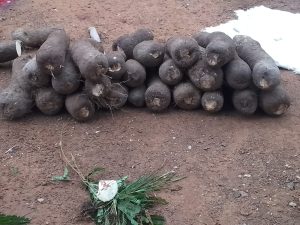 Seed yam companies, the Savannah Agriculture Research Institute (SARI), the Crops Research Institute (CRI) of the Council for Scientific and Industrial Research (CSIR), and the International Institute of Tropical Agriculture (IITA) are developing facilities to produce foundation seed in greenhouses for farmers.
Mr Eric Opoku, Minister for Food and Agriculture, said this in a statement delivered on his behalf at the Ghana Yam Seed Innovation Advocacy Summit in Accra.
He said the new seed technologies could make quality planting materials more affordable and accessible to farmers.
Mr Opoku said Ghana, the world’s second-largest yam producer and leading exporter, was positioned to become a regional hub for quality seed yam production through innovation and strategic partnerships.
He said Ghana produced more than 11 million tonnes of yam annually from more than 600,000 hectares, with the crop serving as a source of food, employment and foreign exchange.
The Minister said technologies including Leaf Bud Cutting (LBC), improved yam varieties, strengthened quality assurance systems and SeedTracker had moved quality seed production from research laboratories towards commercial application.
“These innovations can increase the availability of quality seed, strengthen seed enterprises, improve farmer productivity, create jobs for young people and women, and position Ghana as a regional leader in seed yam production and innovation,” he said.
Mr Opoku reaffirmed the Government’s commitment to creating an enabling environment for agricultural innovation, private sector investment and stronger seed regulatory systems to support the yam value chain.
Dr Richard Asare, Country Director of IITA-Ghana, said the new seed technologies could address a key constraint in yam production because the crop was propagated from the same tuber consumed as food.
“With innovations such as the Leaf Bud Cutting technology, we can now produce quality seed yam more efficiently without competing with the food people eat. This gives farmers access to affordable, healthy planting materials while increasing production,” he said.
Dr Asare said a stronger seed yam system would support Ghana’s position as the world’s leading yam exporter and improve the livelihoods of farming households.
Prof Marian Quain, Deputy Director of CSIR, said collaborative research had produced technologies capable of improving the production and distribution of quality yam seed.
She said the technologies enabled the production of seed yam as small as peanuts, which could develop into marketable tubers weighing three kilogrammes or more.
Prof Quain said the technologies were climate-smart, supported year-round seed production and created business opportunities for young people, women and seed entrepreneurs.
“Yam is part of our culture and our festivals. By strengthening the seed system, we are securing the future of an indigenous crop while creating employment and expanding opportunities across the entire value chain,” she said.
Dr Delphine Amah, Coordinator of the Programme for Seed System Innovation for Vegetatively Propagated Crops in Africa, said certified seed delivered yields that were 90 per cent higher than those obtained from farmer-saved planting materials.
“It is lower disease risk, higher yield, smaller minitubers of between 30 to 100 grams outperform large farmer-saved tubers 200-500 g,” she said.
By Albert Oppong-Ansah, GNA