

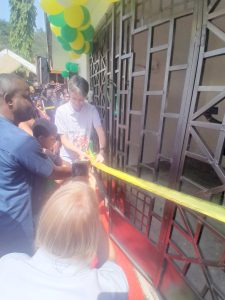
NUS Network-Ghana, an NGO, in collaboration with the Embassy of the Kingdom of the Netherlands and its partners, has inaugurated a modern community seed bank at Abrewankor in the Eastern Region to help conserve indigenous seeds and empower local farmers to protect crop diversity for future generations.
 Supported by the Anton Jurgens Fonds, Alliance Bioversity International and CIAT, the project places strong emphasis on youth and student involvement to ensure long-term sustainability and promote innovation within the agricultural sector.
The initiative seeks not only to enhance farmers’ incomes but also to strengthen resilience to climate change by positioning indigenous seeds as both sustainable resources and economic assets for smallholder farmers across the region.
The Abrewankor Community Seed Bank currently houses 58 varieties of local crops, including maize, cowpea, groundnut, millet and lesser‑known crops such as fonio.
It is accessible to farmers cultivating between two and four acres, helping boost productivity while reducing reliance on costly hybrid or imported seeds.
Beneficiaries are expected to return a portion of their harvest to ensure continuity of the bank and preserve genetic diversity.
Dr Daniel Nyadanu, Coordinator of NUS Network‑Ghana, said the facility goes beyond conservation and is intended to transform indigenous seeds into tools for improved livelihoods, market opportunities and sustainable agriculture.
“We are helping communities adapt to climate pressures while creating avenues for economic growth,” he said.
Dr Nyadanu noted that the seed bank has been designed as a centre for innovation and value addition, offering training in climate‑smart agriculture, improved seed management and post‑harvest processing.
“A local market within the facility will allow farmers to sell both raw and processed products, boosting incomes and strengthening the local economy,” he added.
Agriculture Counsellor at the Netherlands Embassy, Madam Tenniglo Inge, commended the active participation of farmers and students, stressing that youth involvement was critical for the sustainability and long‑term success of the initiative.
Mr Francis Addo Akumatey, the Municipal Chief Executive for Yilo Krobo, said the project aligns with national programmes such as the Feed Ghana initiative.
He emphasised that indigenous seeds could be replanted over multiple seasons, reducing production costs and enhancing resilience to climate shocks.
Nene Tetteh Addey I, Chief of Abrewankor, pledged strong traditional support for the project.
Cultural performances, exhibitions of indigenous crops and displays of value‑added products featured during the commissioning ceremony, highlighting the project’s dual focus on economic empowerment and climate‑resilient agriculture.
Amid climate threats and rising seed costs, the Abrewankor Community Seed Bank is transforming indigenous crops into both an economic lifeline and a defence against environmental challenges, serving as a model for sustainable farming practices across Ghana.
By Kamal Ahmed, GNA