

The search for baobab fruits, scientifically known as Adansonia Digitata, has intensified in the Ziope Traditional Area of the Agortime-Ziope District in the Volta Region, following rising demand for the fruit.
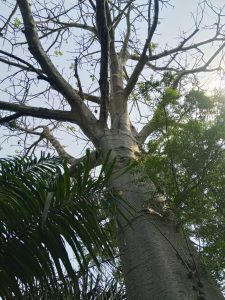 The tree usually bears its fruits during the dry season; and baobab fruit pulp is noted for its high nutritional value, as it is rich in vitamin C, calcium, fibre and antioxidants.
The leaves are also used as vegetables, while the seeds are roasted for consumption or processed into oil.
A visit by the Ghana News Agency (GNA) to the Adzonkor, Agbedor Kofe, Dakudzi and Keyime communities showed resident, particularly the youth, actively harvesting and selling the fruits.
Speaking to GNA at Agbedor Kofe, Master Godsway Torvianyeku, a third-year Junior High School pupil of Adzonkor JHS, said the income from the sale of baobab fruits had helped him support his education.
He said he sold 20 small-sized baobab fruits for GH¢50, while larger ones sold for between GH¢80 and GH¢90.
Another pupil, Miss Rejoice Gokah, expressed similar sentiments and called for the commercial cultivation of baobab trees, saying their nutritional, medicinal and economic importance could not be underestimated.
A baobab fruit buyer, Madam Cecilia Gbogbo, told GNA that demand for the fruit was high in the market, but supply remained inadequate.
She also appealed for large-scale cultivation of baobab trees to meet demand and enhance income generation for residents.
Residents believe that promoting baobab cultivation would improve food security, create employment opportunities, and contribute to environmental sustainability in the district.
Professor Kenneth Egbadzor, Director of Research and Innovation, and HTU Baobab Research Team Lead old the Ghana News Agency, in an interview that the development is insightful and that the public sensitisation exercise on baobab is breaking bounds.
“It means that utilisation is increasing,” he said.
He added that baobab could outstrip cocoa as cash crop for the country, when deliberate investments are made to produce seedlings and commercial production of the crop.
He said baobab is valued for its nutritional, medicinal, and cultural uses, making it a significant resource in various regions, especially in Africa.
Prof Egbadzor said funds are needed to raise the seedlings for the people to crop the commodity on a commercial basis.
He appealed to institutions to come to their aid.
“Alternatively, I will have to sell seedlings if I use my own money for production,” he said.
By Daniel Agbesi Latsu, GNA