
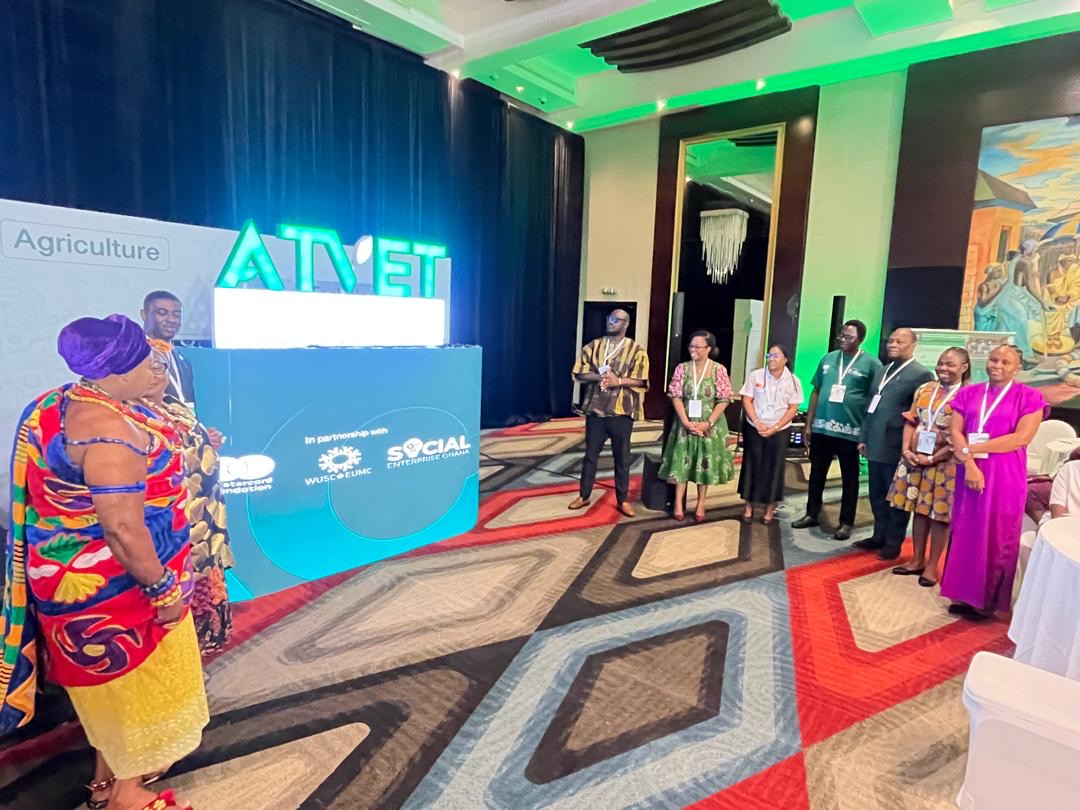
Mrs Appiah Wiafe Addo, the Country Director, World University Service of Canada (WUSC), has called on stakeholders in Ghana’s agricultural sector to strengthen innovation, inclusion, and market-oriented skills development to make agriculture more profitable and dignified career path for young people.
 Mrs Addo made the call on Friday at the opening ceremony of the Accelerating Change Through Innovation in Agriculture TVET (ACTIVATE) Learning Forum in Accra.
The forum was on the theme “Cultivating the Future: Integrating Innovation and Inclusion in ATVET for Ghana’s Youth.”
The ACTIVATE Project is a five-year initiative (2024-2028) implemented by the WUSC, in partnership with the Mastercard Foundation in Ghana, to transform the Agriculture TVET system.
She said the forum marked the first time stakeholders across the agricultural ecosystem had gathered collectively to examine the project’s achievements and discuss how its lessons could contribute to transforming Ghana’s wider agricultural landscape.
The forum also seeks to contribute to a more inclusive agricultural sector in which young people, regardless of gender, disability, or background, can access the skills, financing, networks, and opportunities needed to build sustainable livelihoods.
She said the project was designed to go beyond conventional training by promoting systemic change through the combination of modern market-aligned skills, practical innovation, and inclusion.
“The goal was never just to run standard training but to spark true systemic change,” she said, stressing the need to demonstrate how agriculture could become a dynamic and rewarding career option for young people.
She said the project was designed to create lasting pathways to employment and entrepreneurship for youth aged 15–35 and to equip young people with practical, market-relevant skills.
Mrs Addo said the project had supported young women and men, persons with disabilities, and displaced youth to participate in agricultural opportunities and redefine perceptions of modern agriculture.
The initiative has also contributed to changes within institutions, including the adoption of more inclusive approaches by trainers and the creation of opportunities for young people to gain practical, real-world experience through industry partnerships.
“The forum was not intended merely to celebrate the project’s achievements; instead, participants were encouraged to critically examine evidence from the field and identify approaches that could be scaled up beyond the project,” she said.
Mrs Addo called for these approaches to inform national policies, institutional frameworks, and investments across the agricultural value chain, encouraging all stakeholders to actively contribute to the discussions.
“This is an open invitation to dig deeper. We are here to share the evidence of what works on the ground,” she said.
She expressed hope that collaboration among stakeholders would help translate the lessons from ACTIVATE into broader sector interventions and contribute to a more inclusive and prosperous future for Ghanaian youth.
Participants engaged with exhibitions showcasing the project’s work, participated in discussions, and built partnerships to sustain the lessons and innovations emerging from the initiative.
Mr Paul Kasanga, the Country Director, Mastercard Foundation, said Ghana’s agricultural sector must evolve to reflect changing technology, climate conditions, markets, and the aspirations of young people.
“Agriculture is changing, and we must begin with that simple reality,” he said, noting that developments in technology, including artificial intelligence and drones, were already transforming farming and other activities across the agricultural value chain.
He said, “The forum should go beyond reviewing what had been achieved and focus on three key questions: What has been learned? What must be done differently? And what will it take to build an agricultural system that is fit for Ghana’s future?
Mr Kasanga said that was important because agriculture offered more than farming, adding that changing economic conditions should not be interpreted to mean that agriculture was becoming less relevant to young people.
By Kodjo Adams, GNA