

Dr Zanetor Agyeman-Rawlings, Member of Parliament for Korle-Klottey, has called for specialised pension schemes for women farmers and market queens to enhance their long-term financial security.
 She said market women and farmers remained the “backbone” of local economies, yet lacked structured retirement systems, creating a critical gap in the sector’s development.
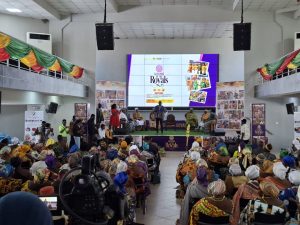
Speaking at the eighth edition of the “Gathering of the Royals” at the GNAT Hall in Accra, Dr Agyeman-Rawlings said the informal and unpredictable nature of agricultural work left many women without financial protection in old age.
“Market women and women farmers form the backbone of our local economies, yet many operate without any form of financial security for the future. That is why the development of special pension schemes tailored to their realities is important. These schemes must be flexible, accessible, and responsive,” she said.
Dr Agyeman-Rawlings urged financial institutions to move beyond rigid traditional models and design products aligned with agricultural cycles and the informal nature of women’s economic activities.
On structural constraints, she called for reforms in Ghana’s land tenure system, noting that limited access to large, contiguous landholdings continued to fragment farms and constrain productivity.
She further warned against the increasing conversion of fertile agricultural land into real estate, describing it as a threat to long-term food security.
“We must be deliberate about protecting our green zones. The increasing conversion of fertile arable lands into real estate development is a growing threat to our long-term food security,” she added.
The event, organised by Agrihouse Foundation on the theme: “Seeds of Change: From Leadership to Legacy Women Reforming the Agri-food System,” brought together more than 600 Queen Mothers from across the 16 regions, alongside policymakers and agribusiness leaders.
The dialogue also highlighted infrastructure deficits in key trading centres, particularly the lack of storage and preservation facilities.
During a panel discussion, market queens from Nima, Malata and Tema Station markets raised concerns about post-harvest losses linked to inadequate facilities.
Madam Challorte Martey, Nima Market Queen, underscored the absence of cold storage systems, which she said was affecting incomes.
“We love the role of farmers in making sure they have a livelihood, but the Nima market needs an upgrade. Without facilities to preserve produce, much of our hard work goes to waste, diminishing the incomes of women who are already struggling to make ends meet,” she said.
Ms Alberta Nana Akyaa Akosa, Executive Director of Agrihouse Foundation, said the annual gathering continued to provide a platform for traditional leaders to contribute to national policy discourse.
She said a communiqué from the deliberations would be submitted to Parliament’s Select Committee on Agriculture to inform future legislative interventions.
By Jibril Abdul Mumuni