

The Media Foundation for West Africa (MFWA) has held a day’s public forum in Tamale to address the growing concerns over agrochemical misuse and its implications for food safety in the country using the media.
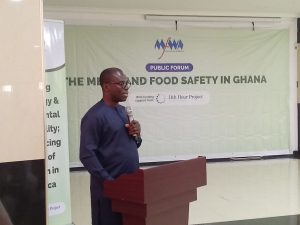 The forum, funded by the 11th Hour Project, was held on the theme: “The Media and Food Safety: Enhancing Public Awareness on Agrochemical Use in Ghana”.
It brought together media practitioners, scientists, farmers, agro-input dealers, and regulators to deliberate on the challenges and opportunities in promoting safer food production practices.
Dr Kwame Sarpong Appiah, Senior Lecturer, Department of Crop Science, University of Ghana, who delivered a keynote address during the event, underscored the urgent need to curb the misuse and overuse of agrochemicals warning that the situation threatened public health, the environment and the country’s long-term food security.
He explained that although pesticides, fertilizers, and plant growth regulators contributed significantly to improved yields and food security, their misuse had created a “dangerously thin line” between productivity and public health.
Dr Appiah cited research findings showing excessive application rates among many farmers and the widespread use of unapproved or counterfeit chemicals.
He noted that pesticide residues had been detected in soils, vegetables, grains, and fish across various parts of the country often exceeding international safety limits.
He said, “Chemicals such as beta-endosulfan, DDE, heptachlor, HCH compounds, lambda-cyhalothrin, and cypermethrin had been found in food items from the Afram River area, the Accra Metropolitan Area, and the Densu River Basin.”
He added that “These substances are associated with acute poisoning and long-term health conditions including neurological disorders, hormonal disruption, and cancer.”
Dr Appiah said many farmers reported symptoms such as headaches, skin rashes, dizziness, eye irritation, respiratory challenges, and general body weakness after spraying largely due to non-use of protective equipment.
He said the misuse of agrochemicals was driven by the lack of training, ignorance of recommended application rates, the belief that “more is better” and unsafe spraying practices including failure to observe pre-harvest intervals.
Dr Appiah cautioned against sensational reporting that could fuel fear and misinformation, emphasizing that journalists must prioritise accuracy, depth, and responsible communication.
He encouraged newsrooms to invest in specialized science and environmental reporting, create platforms for dialogue, and highlight success stories from farmers using integrated pest management and sustainable alternatives.
Mr Sulemana Braimah, Executive Director of MFWA, said the forum was part of efforts to equip the media with knowledge on emerging issues in agriculture and food safety to ensure accurate, ethical, and balanced reporting.
Participants watched a short documentary on agrochemicals and food safety and took part in a panel discussion on the theme: “The Media, Agrochemical Use and Food Safety in Ghana – Challenges and Pathways Forward”.
Mr Abdul-Latif Yimbohi Yussif from the Plant Protection and Regulatory Services Directorate of the Ministry of Food and Agriculture, during the discussion, warned that the abuse of agrochemicals and the influx of illegal products on the market were contributing to cases of food poisoning and contamination across the country.
He said the situation was often worsened by low literacy levels and ignorance among some farmers and called for stronger collaboration among stakeholders to intensify sensitisation and enforcement.
Mr Alhassan Abubakari Baba, a reporter with the Daily Graphic, expressed concern over the communication gap between scientists and journalists, emphasising need for regular briefings and engagements to enable the media to accurately report on scientific innovations and sustainable agricultural practices.
By Solomon Gumah, GNA