

World Vision Ghana, a child rights-focused organization, has launched a project dubbed “ENOUGH” aimed at tackling child hunger and malnutrition in the Bawku West District of the Upper East Region.
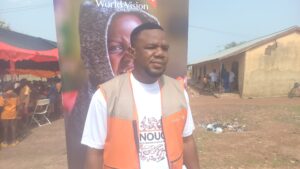 The three-year campaign, launched nationally in 2024, seeks to support efforts of the Government of Ghana and other stakeholders in ending child hunger and malnutrition, and to accelerate progress toward achieving the Sustainable Development Goals (SDGs).
According to the Ghana Demographic and Health Survey (GDHS) 2022, malnutrition continues to affect children across the country, with a national stunting rate of 18 percent.
The report also revealed that 12 percent of children are underweight, and two percent are overweight.
Additionally, almost half (49 percent) of children aged six to 59 months in Ghana are anaemic—28 percent with mild anaemia, 20 percent with moderate anaemia, and one percent with severe anaemia.
Speaking at the launch in Kpantarigu, a suburb of Bawku West, Mr. Rexford Yamdorg Bugre, Regional Operations Manager for the Northern Sector of World Vision Ghana, described the statistics as alarmingly high and far above World Health Organization (WHO) standards.
He emphasized the need for collective action to reverse the trend.
“This is a global campaign to end child hunger. We are saying ‘enough is enough’—enough of the inaction in ensuring that children have access to sufficient, nutritious food,” he said.
Mrs Barbara Amegavie, Campaigns Coordinator at World Vision Ghana, stated that access to food and proper nutrition was a fundamental right of every child and stressed the importance of increasing food production to meet household needs.
She explained that the ENOUGH project would leverage two of World Vision’s ongoing technical programmes: Healthy Environment and Wellness (HEAL), and Livelihood Enhancement and Family Empowerment (LIFE) to consolidate gains.
“One key focus of the campaign is to highlight the data on hunger and stunting, and to advocate for improvements in the school feeding programme, ensuring that children received adequate and nutritious meals in school,” she noted.
As part of the implementation strategy, Mrs Amegavie mentioned that in addition to community food demonstrations, World Vision Ghana will collaborate with partners such as the Ghana Education Service, Ghana Health Service, and the Department of Agriculture to promote the use of locally sourced foods to improve household diet.
She said the initiative would also encourage home, community, and school gardening to help diversify household diets.
Ms Diana Aumanue, Bawku West District Director of the Department of Agriculture, pointed to climate change as a major challenge affecting agriculture in the area and called for support to help farmers adopt early-maturing and climate resilient crops.
Mr Joseph Edwin Yelkabong, Bawku West Cluster Area Programme Manager at World Vision Ghana, urged households to prioritise the health, nutrition, and education of their children by ensuring they were fed with nutrient-rich foods.
Mr James Ayamwego, the Bawku West District Chief Executive, commended the initiative and called on all stakeholders to support the project for maximum impact.
By Anthony Adongo Apubeo