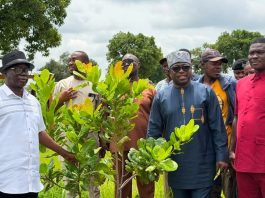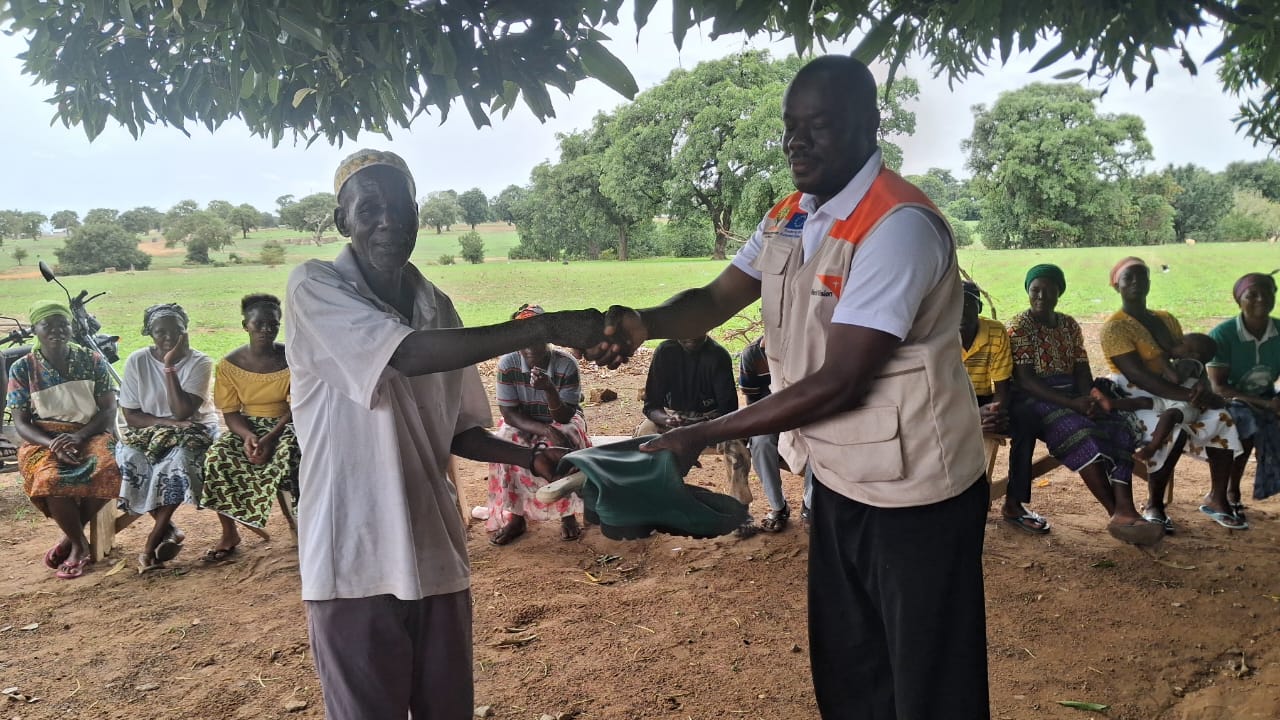
World Vision Ghana, a Christian humanitarian non-profit organisation, has distributed essential field logistics to 5,200 lead farmers and fire volunteers across several communities in the Upper East Region to help restore degraded lands.
 The logistics, which included Wellington boots, hand gloves, knives, and cutlasses, aimed to support the beneficiaries in carrying out critical land and forest regreening and restoration activities such as tree pruning, assisted natural regeneration, tree management, and bushfire prevention and control.
The gesture formed part of the implementation of the four-year Regreening Africa Project being implemented by a consortium led by World Vision Ghana in collaboration with the Catholic Relief Services (CRS).
Overall coordination of the project across Africa is provided by Landscape Alliance (CIFOR-ICRAF) and funded by the European Union.
The project, which adopts the approaches of the Farmer Managed Natural Regeneration (FMNR) concept, is being rolled out across 130 intervention communities in the Binduri, Garu, Tempane, and Bawku West Districts in the region.
FMNR is an easy and low-cost land and forest restoration technique used to increase the number of trees on farmlands without necessarily planting new ones, but through protecting and managing existing trees and shrubs through pruning and protection from bushfires to enable them to regenerate naturally.
At a short ceremony at Azongo community to present the items to the beneficiaries, Dr Richard Appoh, Ghana Project Lead, emphasised the importance of equipping community actors who are at the forefront of landscape restoration efforts.
He said the items formed part of ongoing efforts by the project to strengthen community resilience against climate change, land degradation, and food insecurity through sustainable land restoration and ecosystem management practices.
“The success of regreening depends largely on the commitment and dedication of community members who protect and nurture trees and natural resources. By providing these logistics, we are investing in the people who are driving restoration efforts on the ground. Their work is essential to achieving our goal of restoring degraded landscapes, improving livelihoods, and building resilience to climate change,” he said.
The Regreening Africa Project seeks to improve livelihoods and environmental sustainability by supporting communities to adopt proven regreening practices that enhance land productivity and resilience.
Under the project, a target of 60,000 households will be supported to implement various regreening interventions on approximately 100,000 hectares of land across the Bawku West, Garu, Tempane, Binduri, Yendi, and Mion districts.
The project promotes a wide range of sustainable land management practices, including tree nursery establishment and management, Farmer Managed Natural Regeneration (FMNR), bushfire prevention and management, climate-smart agriculture, tree value chain development, and green enterprise development.
These interventions are being scaled through community-based structures, including Lead Farmers, Fire Volunteer Squads, Eco-Clubs, Savings for Transformation (S4T) groups, youth-led organisations, and farmer groups.
Dr Appoh urged the beneficiary communities to take ownership of the intervention to ensure sustainability.
Ms Diana Akumanue, the Bawku West District Director of the Department of Agriculture, commended the project for supporting frontline environmental stewards in local communities.
“Lead farmers play a crucial role in restoring degraded lands and promoting sustainable agricultural practices. These tools could not have come at a more appropriate time than now, as the rains have just begun. They will go a long way in motivating them to continue supporting efforts to restore degraded lands,” she added.
In his remarks, Assistant Divisional Officer One (ADOI) Abagna Rufai, the Bawku West District Commander of the Ghana National Fire Service, commended the project for supporting the fight against bushfires.
“Fire volunteers are very important in preventing and controlling fires in our communities. These logistics will not only improve their efficiency and safety while working in the field but will also motivate them to continue supporting efforts to reduce bushfires in our communities,” he added.
Naab Ndeogo Amore, the Chief of Azongo community, who received the items on behalf of the beneficiary communities, expressed appreciation to the European Union and project partners for their continued support.
“For many years, our communities have suffered from land degradation, declining vegetation cover, and recurring bushfires. These tools will strengthen the efforts of our volunteers and lead farmers to protect our environment and restore the trees that sustain our livelihoods,” he added.
By Anthony Adongo Apubeo, GNA